About
A therapist who won't pretend to be neutral.
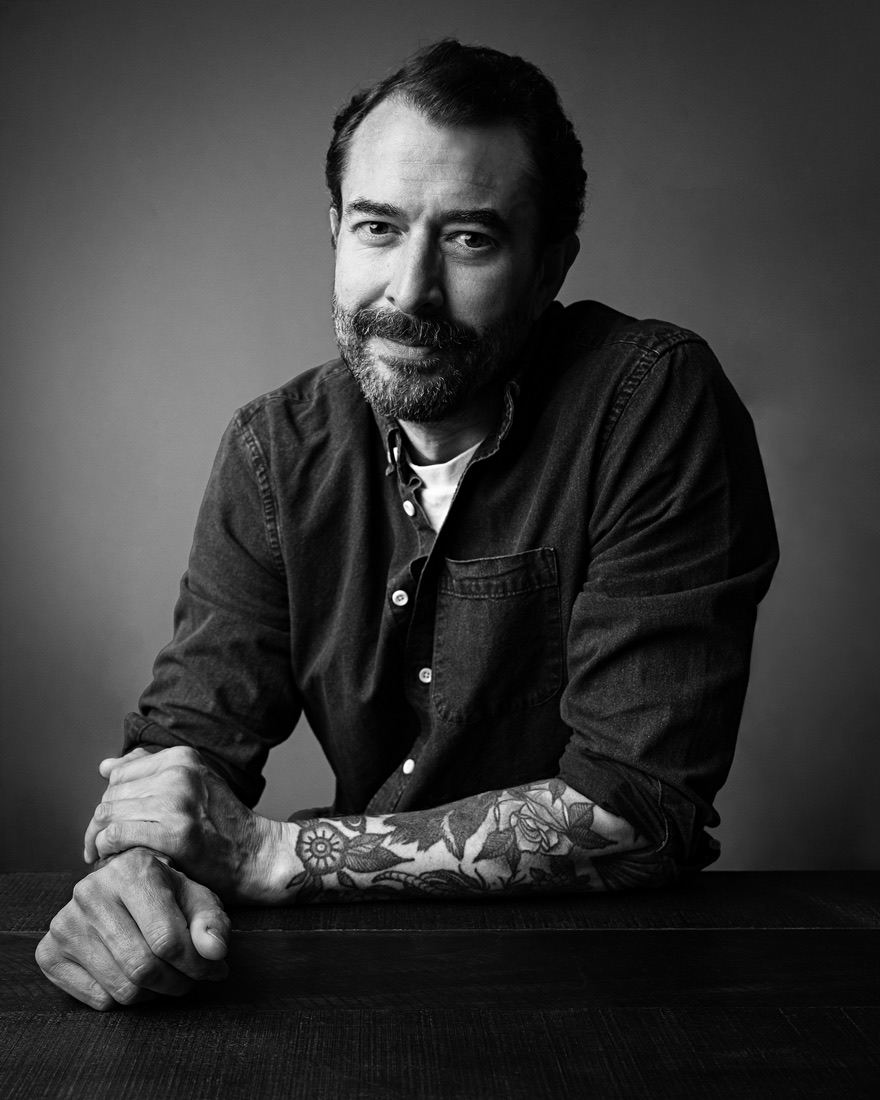
I'm Gabriel Garcia, an LMFT in Los Angeles. I cuss, I quote wild Taoist poets, I'm tattooed, and I came up out of the existential world of punk rock. I don't think you're broken. I think you're living inside a story that stopped serving you.
The short version, if you're deciding
- Twelve years in private practice, LMFT #99274. Online across California, plus a Hancock Park office and walk-and-talk in the Santa Monica Mountains.
- Narrative Therapy and philosophical Taoism. You are not your problem, and your nature was never the thing that needed fixing.
- Before this: touring bands, a ceramics job, a philosophy degree, a nonprofit. None of it decoration. It's how I actually see people.
- I supervise and train other therapists, and I've taught clinicians how to work with psychedelics.
The long version is below, and it's genuinely long. Read it if you want to know who you'd be sitting with.
My fluency is in two disciplines: Narrative Therapy and Philosophical Taoism. Everything else, the punk, the art, twenty-some years in this city, isn't decoration. It's how I actually see people.
Narrative therapy says the problem is never the whole story, and usually it isn't even you. It's your conditioning, the training you were handed and never chose to examine. Taoism says stop forcing: all energy has a correct course, and the work is pointing yours back toward it instead of waging war on your own nature.
The Journal
Essays worth returning to.
Scribbling at the intersection of Poetics, Postmodern Psychology, EcoEcstacy, and Taoism. In your inbox.
Subscribe on SubstackThe short version
- 1997-2003Toured the US with metal, hardcore, and emo bands. Zines, 7-inches, van floors, and the books that got read on them.
- Between toursWorked as a ceramicist and paid for the first philosophy classes that started all of this.
- AntiochB.A. in philosophy. Eastern wisdom traditions, continental philosophy, sociology of religion. Fieldwork in Spain, Japan, Israel, and South America.
- ThenFounded Rogue Scholars, a non-hierarchical experiment in experiential learning, staged across Los Angeles for two years.
- TrainingMaster's at Antioch. Interned at the Southern California Counseling Center and the Narrative Counseling Center.
- Twelve years onPrivate practice in Hancock Park. LMFT #99274. I supervise associates and teach clinicians about psychedelic psychotherapy.
Where I come from
I grew up among the golden hills and oak-filled outskirts of Los Angeles, where the briny sea breeze comes in carrying sage and the unmistakable magic of Southern California. I spent my youth inside punk, skate, and surf culture, and I took to the arts early, drawn first to woodworking and classical guitar. The folk and punk communities put me around makers and mentors who gave me a lasting appreciation for what art can do to a person, and to the world.
On the road
Before I'd even finished high school I started touring with metal, hardcore, and emo bands all over the United States, from 1997 to roughly 2003, playing everything from makeshift punk venues to arenas, selling 7-inch records, handmade zines, and t-shirts. I made lifelong friendships inside an interconnected, fiercely supportive DIY scene, and played a tiny but passionate part in the DNA of underground music.
Out on the road I was lucky to be around self-taught intellectuals, the kind of brilliance you only get from deep, restless engagement with a sea of ideas. I read Nietzsche, Lao Tzu, Adrienne Rich, and Alan Watts in the backs of dusty vans and on motel floors.
I was introduced to ritual magic, esoterica, Buddhism, and Taoism, and I met extraordinary people from all over the world, Krishna devotees, math-metal geniuses, crust punks alike.
Somewhere between tours I took a job as a ceramicist and scraped together enough money to start taking philosophy classes at Moorpark College. It would be years before I put touring behind me, but those classes planted the seeds of everything that came after.
Finding the work
By my late twenties I understood that I had a gift for listening deeply to what people actually want, maybe inherited from my parents, one a professor, the other a therapist. Music had already trained me to attune to others and to collaborate.
As I got older I was pulled toward academia, and I landed at Antioch, a college built on radical thought. When my mother died of cancer, the sheer weight of that loss, and the strange, sudden openings of kairos that come with it, moved me to enroll and finish my degree.
I studied Eastern wisdom traditions, the history and sociology of American utopian and communal movements, postmodern and continental philosophy, classical literature, new religious movements, and the philosophy of religion. I did fieldwork in the sociology of religion and traveled to sacred sites in Spain, Japan, Israel, and South America.
Rogue Scholars
After my B.A. in philosophy I was at a crossroads, academia and philosophy, or psychology, and I couldn't decide. So I took a hiatus and started a nonprofit called Rogue Scholars, a radical experiment in pushing experiential learning to its limit and challenging how we teach.
I ran it for two years, staging events all over Los Angeles on a non-hierarchical model, bringing texts to life through curated experiences, Noam Chomsky, Guy Debord, Jane Jacobs, Jack Halberstam, Jürgen Habermas, Henri Lefebvre, and collective works like those of The Invisible Committee. The whole point was to make these ideas accessible to anyone, whatever their level of scholarship.
The practice
I went back to Antioch for my master's and found my footing in the work of Michael White and Narrative Therapy, which drew so much of its thinking from anthropology, local knowledge, and critical theory. I was also shaped by Carl Rogers and the humanistic theories behind relational Gestalt.
Through all of it I kept returning to the Taoist tradition, its subversion of language, the possibilities buried in its poetry, and it still runs through everything I do. I interned at the Southern California Counseling Center and the Narrative Counseling Center, and when I finished I opened my own practice. It's now twelve years running.
These days I'm less interested in obscure, wayward cults and more in the place where ecology and psychology meet. I hosted a scholarly podcast, Shoot the Dancing Bear, an intersectional look at pop culture, philosophy, literature, and psychology. I've led workshops teaching therapists about psychedelic psychotherapy, and I've trained a number of talented, fledgling therapists toward building careful, compassionate rooms of their own.
What working together feels like
Not clinical. Not a blank screen nodding at you. Being a therapist isn't a call-in job where disconnected clients ramble for years and call it healing. Plenty of therapists say "you don't have to do this alone." Honestly? That's a hollow thing to say, comforting and empty. I'm in it with you, I'll tell you the truth, and I could not be more serious about your change. You'll always know where you stand with me.
I tell you all of this because the people who tend to find me, artists and makers, teenagers who feel everything a little too loudly, adults who've built something real and quietly wonder if it's theirs, are usually carrying some version of what I've carried. I'm not above any of it. I've just spent a long time in the territory, and I know my way around it well enough to walk it with you.
Licensed Marriage and Family Therapist (LMFT #99274) in the State of California. I supervise a small team of associate therapists so good care stays within reach. Otherwise you'll find me in record stores, on long walks, and deep in books that have no business being as comforting as they are.
Curious if we'd work well together?
You've read where I come from. Twenty minutes on the phone tells you the rest faster than another page will.
Book a free consultation