Rates

Work with me.

The money conversation is a five-minute conversation. I keep a deliberately small caseload, by design, so whoever I'm working with gets my full attention and continuity, not a managed load. This is an out-of-network practice, and there is more than one way in.

What working together actually looks like

Not the theory. The actual pattern, from twelve years of doing this.

The twenty-minute consult

We meet for twenty minutes over Zoom, free of charge, and you can book it directly from the website. There's a specific reason this comes first, before any real work starts: the research on therapy outcomes is fairly consistent that the technique or theory matters less than the connection between therapist and client. If we don't fit, the best method in the world won't help you much. So that's what this call is actually for. Not an intake form with a pulse. A chance to talk, get a real sense of each other, and feel out whether we connect as people.

It's a good time to ask me anything, what I'm actually like to work with, how I think about the thing you're bringing in, whatever you want to know before committing real time and money. Tell me what's worked in past therapy and what hasn't; that tells me more than almost anything else. By the end, you should have an intuitive sense of whether this is right for you, and I'll tell you honestly if I think I'm the right fit or not.

We'll also cover the practical side: what a session costs, how often we'd meet, and a rough sense of what the work ahead might look like, some of that we can actually anticipate, some we can't yet.

This is what the twenty-minute consult actually is: a real conversation, not a sales call.

The first session

We start on time, online or in the room, and I ask you to just tell me everything on your mind. All of it, even the pieces you're not sure belong. That's the first ten to fifteen minutes, and it's already an experiment in trust: you're handing me a wide, tangled picture of your life, and I have to actually hold it. I'll ask you to clarify where I need to, and by the end of that stretch I'll tell you honestly, from where I'm sitting, how I think I can help. No hedging, no vague nodding along.

The middle of the session shifts into something closer to a real conversation. I ask a lot of questions, mostly following what you just brought in rather than a script. You'll have to trust my instincts here, I'm listening for the thread that matters most, and I'll check in with you as we go so you always know why I'm asking what I'm asking. We use this stretch to set the actual frame for the work: fee, cadence, what the next few months might realistically look like. Nothing gets decided behind your back. Most people leave this part relieved, not because anything's been solved yet, but because someone finally took the whole picture in at once, and took it seriously.

The last part of the session is deliberately not about the problem. I ask what's working. What you've already gotten through, what you're quietly proud of, where you already feel competent, or find real pleasure, even the small stuff. I want to know you outside the story that brought you in, because more often than people expect, the way through the problem is sitting inside that other story, the one about what you're already good at. It also gives me a second, truer read on who you are before we've done any real work at all.

By the time we're done, you should have a clear sense of whether this is a fit, roughly what we'd be working on, and what to expect if we keep going.

This is what a 50-minute first session actually is.

The arc of therapy

The first two or three sessions are mostly mapping. We're not trying to fix anything yet, we're getting the actual shape of the pattern: how long it's been running, what's already been tried, where it shows up hardest. I'm listening for the story you've been told about yourself, and starting to separate it from you as a person. Nothing about this phase should feel urgent. If it feels slow, that's usually right on schedule.

Somewhere around week four through eight, the work sharpens. We've usually landed on real language for the problem by now, something more specific than "anxiety" or "this thing with my mother," and once it has a name we can actually look at it instead of just living inside it. This is also, honestly, where the messy middle tends to show up. People sometimes feel worse here, not because anything's gone wrong, but because looking directly at a pattern you've spent years managing by not looking at it is uncomfortable. If you feel stuck around this point, that's not a sign the work has stalled. It's often a sign it's landed somewhere real.

By month two or three, most people start noticing exceptions on their own: a moment they caught the old pattern mid-swing and did something different, out in their actual life, not just in the room. That's usually the clearest signal the work is taking, more reliable than how any single session felt. Some people use that shift to go deeper, into identity, values, the longer architecture of how they got here. Others find that once the specific thing that brought them in has real traction, they're ready to stop, and that's a completely legitimate outcome, not an unfinished one.

Past that point, the arc genuinely diverges by person. I've had clients solve what they came in for in two sessions and never need to come back. I've had others stay with me for over a decade, using the space as an ongoing, dependable place to process whatever life is currently handing them. Neither is more successful than the other. Some people need a confidential place to think out loud on a regular basis. Others are moving through one specific, deep transition and are done when they're through it.

We check in on the arc regularly, not just once at the start, and I'll always tell you plainly where I think things stand and what I think comes next. But the decision about how long we keep going, or whether to stop, is always yours. You should never be confused about what's happening or why.

Gabriel Garcia, LMFT

Adults, artists, couples, and teens. Most sessions happen online, anywhere in California; in person, we meet for walk-and-talk in the Santa Monica Mountains or at the Hancock Park office.

Sessions are $375, fifty minutes. If your plan has out-of-network benefits, the superbills I provide are what you submit for partial reimbursement, so it's often not what it finally costs you.

  • A free 20-minute consultation to start
  • Online sessions anywhere in California
  • In person: walk & talk in nature, or the Hancock Park office
  • Private out-of-network practice, superbills for reimbursement

The calendar is the fastest route. If you'd rather write first, that's completely fine, a couple of sentences is plenty. The consultation is a real conversation, not a formality, I'll tell you honestly whether there's a fit.

On cost & access: If you can't afford the full fee, please don't let that be the reason you don't reach out. I hold a few sliding-scale spots, reserved for people whose work matters but whose financial reality doesn't yet match the fee. If that's you, the conversation is real, and I'll tell you honestly whether there's a fit and what's available. Payment by card, HSA, and FSA accepted.

The Journal

Essays worth returning to.

Scribbling at the intersection of Poetics, Postmodern Psychology, EcoEcstacy, and Taoism. In your inbox.

Subscribe on Substack

Associates I supervise.

Registered Associate Marriage & Family Therapists working under my clinical supervision. Same philosophy, same depth, $150 per 50-minute session. Every case they carry is reviewed with me.

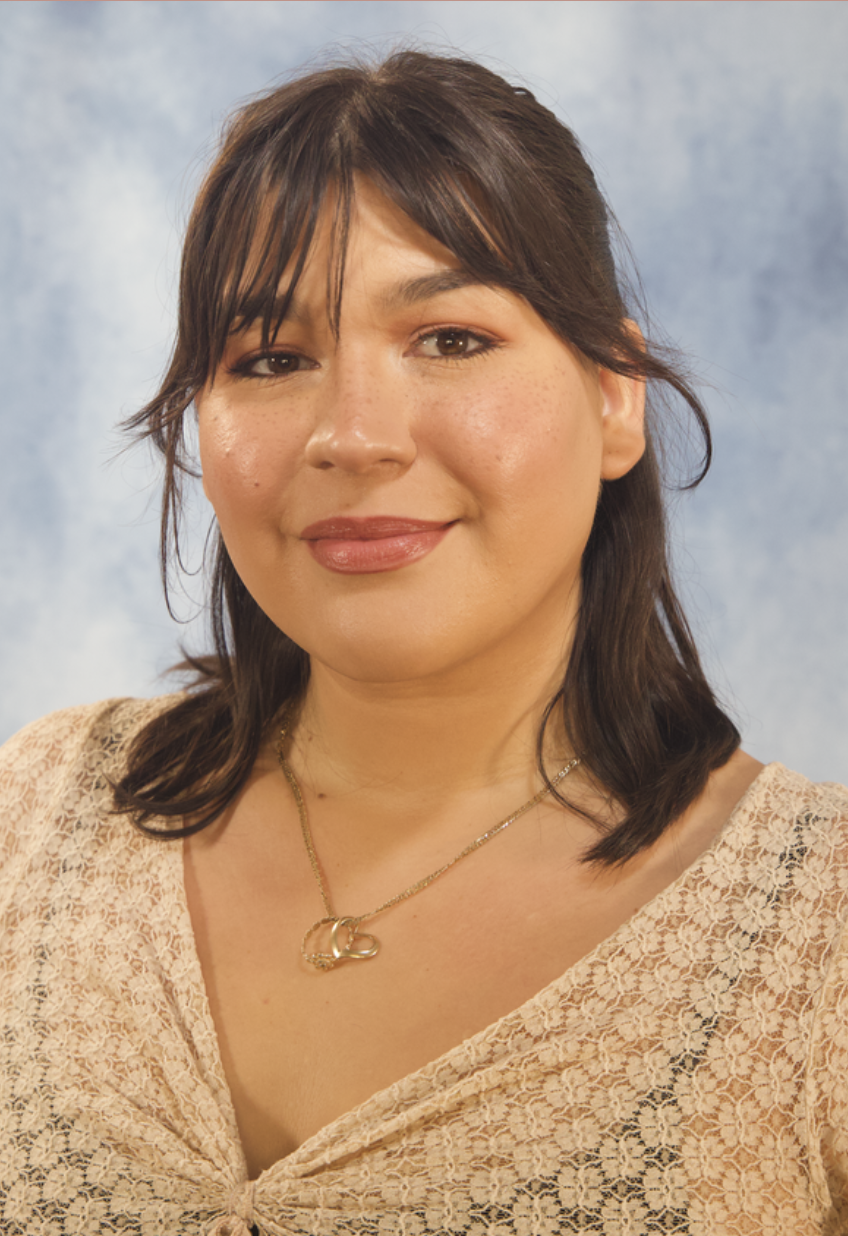
Mimi Le, Registered Associate MFTML

Mimi Le, Registered Associate MFT #146222

Couples, teens and individual

Employed by Anarchotaoist Family Therapy · Supervised by Gabriel Garcia, LMFT #99274

Healing isn't about perfection. It's about returning to alignment with who you truly are.

My practice is rooted in the belief that healing is not linear and is a deeply personal journey. I aim to support you not only in finding solace, but also in cultivating creativity, resilience, balance, agency, authenticity, and wellness. Together, we won't chase perfection. We'll work toward alignment with your values, your goals, and the life you envision for yourself.

I see therapy as a collaborative process, an exploration of your emotional, intellectual, and spiritual depth. In spaces where agency may have been lost or denied, I strive to help reintroduce it gently and intentionally. It is through this co-creative process that choice becomes possible again, and that possibility can feel empowering.

My own journey has shaped the lens through which I view healing: as a prism, multidimensional, complex, and ever-shifting. We are all human beings, equals, working to uncover the many layers and colors that make up who we are. I approach each person not as a problem to be fixed, but as a soul navigating life. I, too, have known the terrain of struggle, and it's from that place that I meet you, with empathy, curiosity, and humility.

While I bring training, tools, and therapeutic insight to our work, I also bring presence. I believe you already hold the wisdom and strength needed for transformation. My role is to support you as you rediscover and expand your own palette, creating a more honest, aligned, and liberated life.

If this resonates with you, I invite you to reach out. Let's explore this journey together.

Contact Mimi: (949) 414-4488

Analia Rey, Registered Associate MFTAR

Analia Rey, Registered Associate MFT #133492

Couples, teens and individual

Employed by Anarchotaoist Family Therapy · Supervised by Gabriel Garcia, LMFT #99274

Relationships have an incredible way of bringing both our deepest joys and our deepest struggles to the surface. Whether you're healing from heartbreak, finding yourself stuck in the same dating patterns, trying to strengthen your relationship, navigating the challenges of adolescence, or balancing a creative career with the rest of your life, therapy offers an opportunity not only to heal, but to create something new.

Insight is powerful, but it's only one piece of the puzzle. In our work together, we'll combine deep and curious inquiry with practical, evidence-based strategies to help you break old patterns, move through difficult seasons, and build a rich, meaningful, value-driven life. I see therapy as a collaborative process, we'll be co-travelers on a journey where you are the expert on your own experience, and together we'll discover what helps you move toward the life and relationships you truly want.

My focus is working with individuals, couples, teens, and creatives. I have a particular passion for helping people heal after heartbreak, navigate the wild world of dating, break free from recurring relationship patterns, and build healthier, more connected relationships with themselves and others. I also enjoy supporting creatives as they navigate comparison, perfectionism, burnout, and the unique emotional challenges that come with ambitious and creative careers.

Acceptance and Commitment Therapy (ACT) and Narrative Therapy form the foundation of my work, and I draw on ideas from attachment theory, DBT, mindfulness, and psychodynamic therapy to tailor treatment to each client's unique needs. I believe therapy is never one-size-fits-all, and we'll collaborate to find an approach that feels authentic, effective, and aligned with your goals.

For clients who find it meaningful, I also enjoy incorporating spirituality into our work, supporting you in connecting with your spiritual self in whatever way makes sense to you.

Contact Analia: analiareytherapy@gmail.com

A few common questions.

Do you take insurance?

I'm out-of-network, which keeps your care private and unconstrained by diagnosis requirements. I provide superbills you can submit for partial reimbursement.

In-person or virtual?

Both. In-person sessions are in Los Angeles; virtual sessions are available to anyone located in California via secure video.

How often do we meet?

Most people begin weekly. It's where momentum lives. We can adjust the cadence as the work and your life shift.

For Therapists

Supervision & office rental.

Two ways to work together outside of client care, if you're building hours toward licensure or need a professional space in central LA.

Clinical Supervision

$150 / hour

Individual supervision for registered associates working toward licensure. Twelve years in private practice, with a background in Narrative Therapy, Philosophical Taoism, and training a small team of careful, thoughtful clinicians.

  • Individual supervision sessions
  • Narrative & humanistic orientation
  • Support building a private practice
  • Available online or in person
Call to discuss

Office Rental

$45 / hour

A private, well-appointed therapy office steps off Larchmont in Hancock Park, quiet, professional, and centrally located near Hollywood and Los Feliz.

  • Private office in Hancock Park
  • Steps off Larchmont Blvd
  • Suitable for individual & couples sessions
  • Available by arrangement
Call for availability

Let's find out if we're a fit.

Twenty minutes, free. I'll tell you honestly what I see, and whether I'm the right person for this.

Book a free consultation
Your right to a Good Faith Estimate. Under the federal No Surprises Act, you have the right to receive a written estimate of what your care will cost if you are uninsured or not using insurance. I provide a Good Faith Estimate in writing before we begin, and any time you ask for one. If the final bill is at least $400 more than your estimate, you can dispute it. Keep a copy for your records. More at cms.gov/nosurprises.